
Some people think that governments should spend more money on public transportation to reduce traffic congestion and pollution. Others believe the money should be used to improve road infrastructure. Discuss both views and give your own opinion.
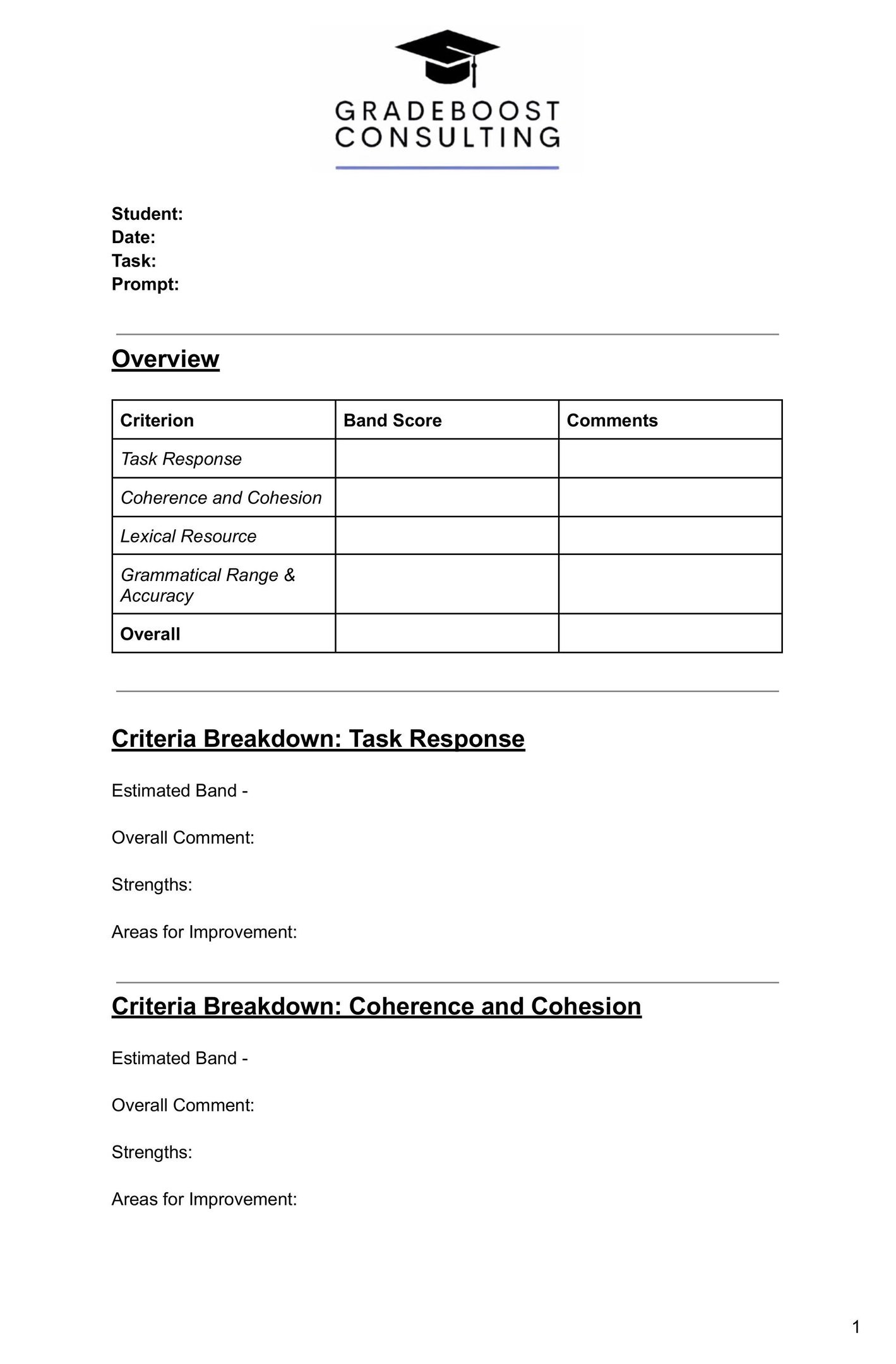
This essay is a clear example of a performance that would likely score in the Band 5 to 6 range, with its final score probably settling at 5.5. While it addresses the general topic, it fails significantly in its response to the specific instructions of the prompt. The argument is fundamentally undermined by a combination of being overly one-sided and containing severe logical fallacies.
Here is a detailed breakdown against the four official IELTS assessment criteria:
1. Task Response (TR) - Band 5
The Band 5 descriptor for TR states that the essay "addresses the task only partially" and "expresses a position but the development is not always clear and there may be no conclusions drawn." This perfectly describes your essay's primary weakness.
Critical Weakness: Failure to "Discuss Both Views" The prompt explicitly requires you to "discuss both views." Your essay almost completely ignores one of the two views—the argument for funding public transportation.
Quote from Introduction: “In my opinion, improving road infrastructure is the only effective solution because it solves both problems at once.”
Insight: By using the word "only" in your thesis, you immediately dismiss the alternative view before even beginning your discussion. This signals to the examiner that you are not going to engage with the prompt fully. A high-scoring essay must give fair and reasonable consideration to both sides of the argument before concluding which is stronger.
Quote from Conclusion: “while some people argue that public transportation is important, I believe improving roads is the most effective way…”
Insight: This is the only mention of the opposing view in the entire essay, and it's a dismissive one. You have not discussed the view; you have merely acknowledged its existence before rejecting it. A proper discussion would require a dedicated paragraph exploring the merits of public transport (e.g., its ability to move large numbers of people efficiently, reduce the total number of vehicles on the road, and provide essential mobility for those who cannot drive).
Critical Weakness: Arguments Based on Logical Fallacies Your arguments in favour of roads are not just underdeveloped; they are logically flawed, which severely damages the persuasiveness of your essay.
The False Cause Fallacy: You incorrectly assume that because two things happen together, one causes the other.
Quote: “If roads are improved, cars will move faster, so they will pollute less.”
Insight: This is a classic logical error. While a single car moving at a steady speed pollutes less than one in stop-start traffic, building more roads encourages more people to drive (a phenomenon known as "induced demand"). The resulting increase in the total number of cars would almost certainly lead to a net increase in overall pollution, directly contradicting your claim.
The Hasty Generalization Fallacy: You draw a broad conclusion from insufficient evidence.
Quote: “adding extra lanes to major highways has already reduced traffic in some places, so it would work everywhere.”
Insight: This is an unsupported leap in logic. Traffic solutions are highly context-dependent. A strategy that works in a low-density suburban area may fail or even worsen congestion in a dense urban core. An examiner will immediately recognize this as a weak, uncritical argument.
2. Coherence and Cohesion (CC) - Band 6
The essay is structured in a readable way, but the logical connections between ideas are weak and flawed. The Band 6 descriptor notes, "arranges information and ideas coherently... but cohesion within and/or between sentences may be faulty or mechanical."
Strength: The essay has a clear, if simple, structure: introduction, two body paragraphs supporting one view, and a conclusion.
Weakness: Faulty Internal Logic: The use of cohesive devices cannot save a flawed argument.
Quote: “Also, if roads are better, more people will choose to drive... Therefore, better roads mean fewer emissions overall...”
Insight: Here, the linking word "Therefore" is used incorrectly. A conclusion should follow logically from the premise. The premise is "more people will choose to drive." The conclusion is "fewer emissions overall." These two ideas are contradictory. This shows a fundamental breakdown in logical cohesion within the paragraph.
3. Lexical Resource (LR) - Band 6
Your vocabulary is adequate to discuss the topic, but it is repetitive and lacks precision. The Band 6 descriptor states, "uses an adequate range of vocabulary for the task" but attempts at less common vocabulary "may be inaccurate."
Repetitive Vocabulary: You rely heavily on a small set of words.
Examples: The phrases "improve roads," "better roads," "reduce traffic," "solve pollution problems," and "spend money on" are used multiple times. A higher-scoring essay would use synonyms and rephrase concepts: “investing in infrastructure,” “upgrading the road network,” “alleviating congestion,” “curbing harmful emissions,” and “allocating government funds.”
4. Grammatical Range and Accuracy (GRA) - Band 6
The essay uses a mix of simple and complex sentences with reasonable accuracy, which is typical of a Band 6 performance.
Strength: The writing is mostly free of grammatical errors that impede understanding.
Weakness: Limited Sentence Variety: The majority of sentences follow a simple Subject-Verb-Object structure. To score higher, you need to demonstrate a wider range of complex structures, such as participle clauses, inversion for emphasis, and more varied use of subordination.
Summary for Improvement:
Answer the Whole Question: When the prompt says "discuss both views," you must dedicate significant space (ideally a full paragraph) to exploring each view fairly before you give your own opinion.
Scrutinize Your Logic: Avoid making huge claims without evidence. Ask yourself if your argument makes sense. Does "more driving" really lead to "less pollution"? Acknowledging the complexity of an issue is a feature of high-scoring essays.
Expand Your Vocabulary: Before writing, brainstorm synonyms for key concepts in the prompt (e.g., roads, public transport, pollution, money, government).
Acknowledge and Refute: A very effective structure for this type of essay is to discuss View A, then discuss View B, and then in your conclusion, explain why you believe one view is stronger than the other, directly addressing the trade-offs.
Quick links
Newsletter
© Gradeboost Consulting 2025. All rights reserved.
Connect